Editor marking up a manuscript

Most manuscripts get the wrong edit

Someone finishes a draft, feels nervous about typos, and buys a proofread. The typos go. The reason readers stop at chapter three doesn't, because a proofreader was never looking for it. Paying for the right pass in the right order is the difference between a book that reads well and a book that's merely correct.

The four passes, and what each one is really for

Most manuscripts don't need all four. Knowing which ones you need is the first useful thing an editor can tell you.

Developmental. The structure

This one works on the whole book. Does the argument hold up. Does the ending get earned. Is your protagonist behaving like the same person in chapter twenty. Is chapter nine doing anything chapter four didn't already do. You get an editorial letter, not a marked up file. It's the only pass that can tell you a chapter shouldn't exist.

Line editing. The voice

Paragraph by paragraph, on rhythm and clarity. It fixes sentences that are technically fine but land badly. Buried subjects, sagging pace, dialogue where everyone sounds the same. This is the pass that changes how a book feels to read. It's also the one people skip.

Copy editing. The consistency

Grammar, punctuation, usage. Plus the internal stuff: eye colour, timeline, hyphenation, how you capitalise your invented terms. It runs off a style sheet that records every call, so page 12 and page 312 treat the same thing the same way. US convention is Chicago unless there's a reason not to be.

Proofreading. The last look

Done on the typeset pages, not the manuscript. That's deliberate, because it's also catching layout faults. Bad line breaks, widows, a running head still naming the last chapter, a page number that slipped. Proofread before layout and you miss all of it.

How we work on your manuscript

Editing only works if you can see exactly what changed and say no to any of it.

Tracked changes
Every edit comes back in Word with Track Changes on. You accept or reject each one. Nothing gets changed quietly, and you always still have your original.
A style sheet you keep
Every judgement call gets written down. Spellings, invented terms, numbers, character details. You keep it, so book two stays consistent with book one.
Questions, not rewrites
Where the meaning isn't clear, the editor asks instead of guessing. The reasoning sits in the margin so you can disagree knowing why.
Genre rules respected
A thriller and an academic book don't follow the same rules on tense, dialogue tags or paragraph length. Edit without knowing the genre and you get clean prose that reads wrong to the exact people who buy it.
Your voice is the limit
A good line edit sounds more like you, not more like the editor. We don't rewrite a sentence just because another phrasing existed.

Two things we won't do to your manuscript

Editing goes wrong in predictable ways. These are the two we're strict about.

We won't rewrite you into someone else

The test of a good line edit is that it sounds more like you afterwards, not more like the editor. If a sentence works, it stays, even when another phrasing was available. Every change comes back tracked so you can see it and reject it.

We won't edit against your genre

Thrillers and academic books follow different rules on tense, dialogue tags and paragraph length. Edit without knowing the genre and you get clean prose that reads wrong to the exact readers who were going to buy it.
Still sitting on a finished manuscript?

Every month it sits in the drawer is a month nobody reads it. Tell us where the book is at and we'll give you a straight answer on what it needs.

Send us a chapter first

You shouldn't have to commit to a full edit to find out whether an editor understands your book. Send a chapter. We'll tell you which pass it actually needs, and if it doesn't need us yet we'll say that too.

Tracked changes on an edited manuscript page

Why Choose
Publisher In USA?

You've probably heard that publishing services take your money, take your rights and go quiet. The industry earned that reputation. So here's how we work instead.

You keep everything

Your rights, your royalties, your files. Nothing we make gets licensed back to us.

You see it before you pay

Scope in writing first. No work starts on a handshake and a number that moves later.

You can walk away with it

Source files, print ready files, accounts and logins. All handed over, all in your name.

We'll tell you no

If your book doesn't need a service, we'll say so. That's cheaper for you and better for us.

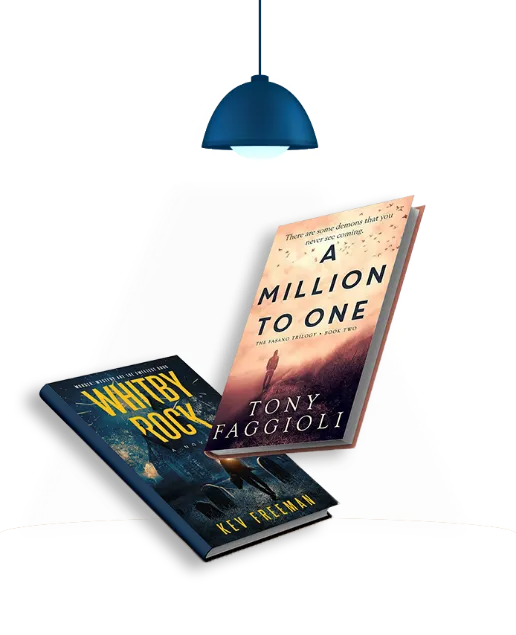
Explore the Treasury of Our Published Books

Real books we've worked on. Covers, interiors and distribution, all of them out in the world.

Still sitting on a finished manuscript?

Every month it sits in the drawer is a month nobody reads it. Tell us where the book is at and we'll give you a straight answer on what it needs.

How the work actually runs

Five stages, and you sign off at every one. Nothing moves to the next stage until you've said yes to the last.

01

Proposal

Tell us where the book is and what you want it to do. We'll tell you what it actually needs.

02

Manuscript Submission

Scope and price agreed in writing before anyone starts. You know the number up front.

03

Production

Editing, layout, cover, whatever the scope says. You approve each stage as it lands.

04

Proofreading

Final proof on the typeset pages, plus a physical proof copy before anything gets printed at volume.

05

Publication

Retailer setup, metadata, categories and keywords. Then the files and logins come to you.

1

What Our Clients Say

We don't publish testimonials on our own site anymore. Ours live on Trustpilot, where you can check them yourself.

Verified reviews

We publish our reviews on Trustpilot so you can verify them independently rather than take our word for it. Read what our authors have said at trustpilot.com/review/publisherinusa.com.

(301) 246-0557
Lets Talk
sales@publisherinusa.com
Like Us On Facebook
Follow Us on Insta